
Rediscovering the Art of Coffee
In a world obsessed with speed and automation, there is a quiet revolution happening in kitchens across America. It’s the return to the ritual. The push-button convenience of a standard drip machine might get caffeine into your system, but it often leaves the soul of the coffee bean behind. If you are reading this, you are likely ready to graduate from “just coffee” to a true coffee experience. This is where manual brewers come into play.
Manual brewing is not just about making a drink; it is about taking five minutes for yourself to engage with the sights, smells, and sounds of the process. It’s about control. When you switch to a manual brewer, you unlock flavor notes in your favorite beans that an automatic machine simply washes away. Whether it’s the rich, heavy body of a French Press or the tea-like clarity of a Chemex pour-over, the vessel you choose shapes your morning cup.
But with thousands of options on Amazon, where do you start? We’ve sifted through the noise, analyzed the reviews, and tested the legends to bring you the top 5 manual brewers on Amazon that every coffee lover needs to consider. Whether you are a camping enthusiast, a design snob, or an espresso lover on a budget, there is a tool here for you.
Let’s dive into the gear that will change the way you wake up.
Table of Contents
1. The Ultimate Travel Companion: AeroPress Original Coffee Maker
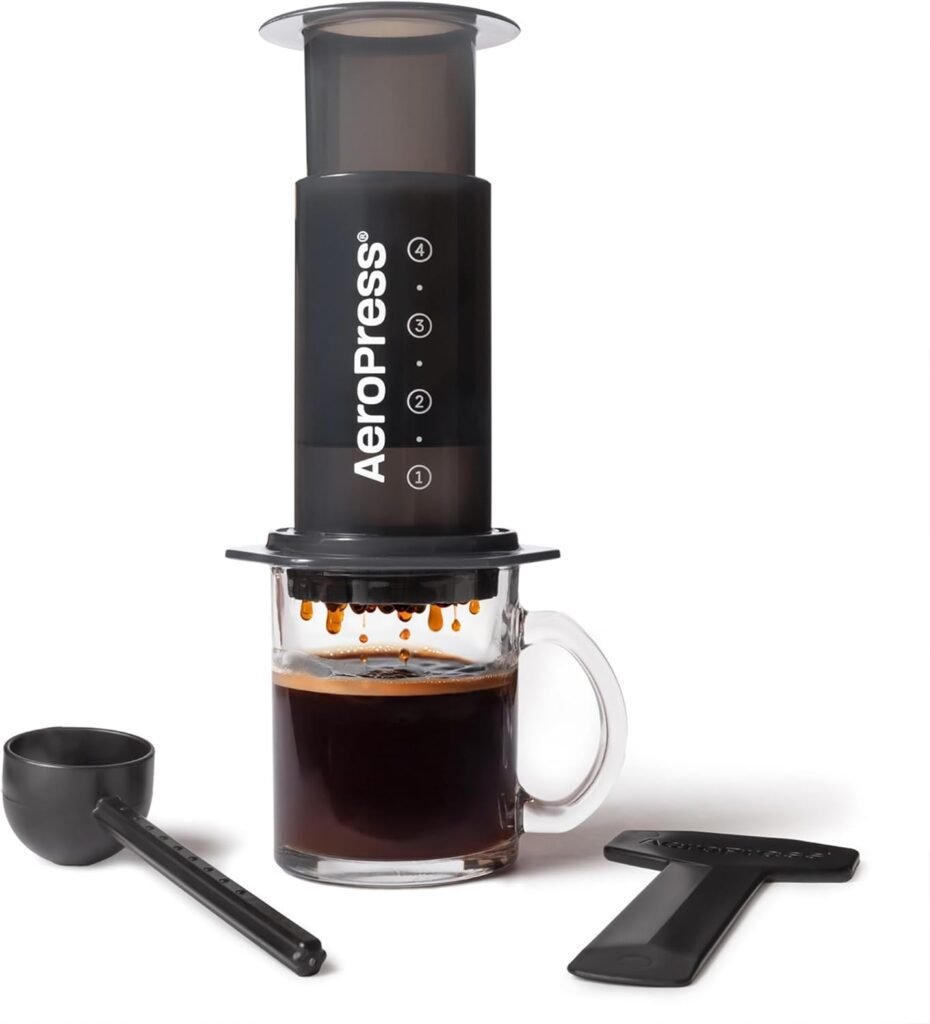
Rating: ★★★★★ (4.8/5 on Amazon) Best For: Travelers, campers, and those who love versatility.
The AeroPress is arguably the most innovative coffee invention of the 21st century. Invented by Alan Adler (the same guy who created the Aerobie flying ring), this odd-looking plastic tube has garnered a cult following worldwide. Why? Because it is virtually indestructible, incredibly forgiving, and makes a damn good cup of coffee in under two minutes.
How It Works: The AeroPress uses immersion brewing (like a French Press) combined with air pressure. You add coffee and hot water, let it steep for a moment, and then use the plunger to push the coffee through a paper filter directly into your mug. The air pressure helps extract more flavor in less time and reduces acidity.
Why We Love It: The versatility is unmatched. You can make “espresso-style” strong coffee for lattes, or add water for an Americano-style cup. It’s also made of BPA-free plastic, meaning you can toss it in your backpack for a hiking trip without worrying about shattering glass.
Pros:
- Speed: Brews a full cup in about 60-90 seconds.
- Durability: Perfect for travel and outdoor use.
- Cleanup: The famous “pop” ejects the puck of grounds straight into the trash. Rinse and you’re done.
- Flavor: smooth, rich, and low acidity.
Cons:
- Capacity: Only brews 1-2 cups at a time. Not great for dinner parties.
- Aesthetics: It looks more like a science experiment than a kitchen centerpiece.
Who Is This For? If you are the only coffee drinker in the house, or if you find yourself constantly on the road, the AeroPress is a non-negotiable addition to your kit.
2. The Design Icon: Chemex Pour-Over Glass Coffeemaker

Rating: ★★★★★ (4.7/5 on Amazon) Best For: Design lovers and those who prefer a clean, crisp cup.
Walk into the Museum of Modern Art (MoMA) in New York, and you will find a Chemex. Walk into the kitchen of a serious coffee pro, and you’ll likely find one there, too. Invented in 1941, the Chemex is an hourglass-shaped vessel made of non-porous borosilicate glass, wrapped in a wood collar with a leather tie. It is stunningly beautiful, but its beauty is functional.
How It Works: The Chemex is a pour-over method. You place a thick, bonded paper filter in the top cone, add grounds, and slowly pour hot water over them. The gravity-fed extraction drips coffee into the bottom carafe.
Why We Love It: The secret is in the filters. Chemex filters are 20-30% thicker than standard filters. They trap almost all the sediment and coffee oils (diterpenes), resulting in a cup that is incredibly clean, bright, and sweet. If you love light-roast coffees with floral or fruity notes, the Chemex will make them sing.
Pros:
- Flavor Clarity: produces the cleanest cup of coffee possible.
- Capacity: Available in 6, 8, and 10-cup versions, making it great for sharing.
- Design: It looks gorgeous on any countertop.
- Dual-Use: The bottom acts as a serving carafe.
Cons:
- Fragility: It is glass. If you drop it, it breaks.
- Technique: Requires a specific pouring technique (a gooseneck kettle is recommended).
- Filters: You must buy the proprietary Chemex filters for the best results.
Who Is This For? The aesthetic minimalist who hosts brunch on Sundays. If you enjoy the ritual of a slow pour and prefer a coffee that feels light and tea-like rather than heavy and oily, the Chemex is your match.
3. The Rich & Robust Classic: Bodum Chambord French Press
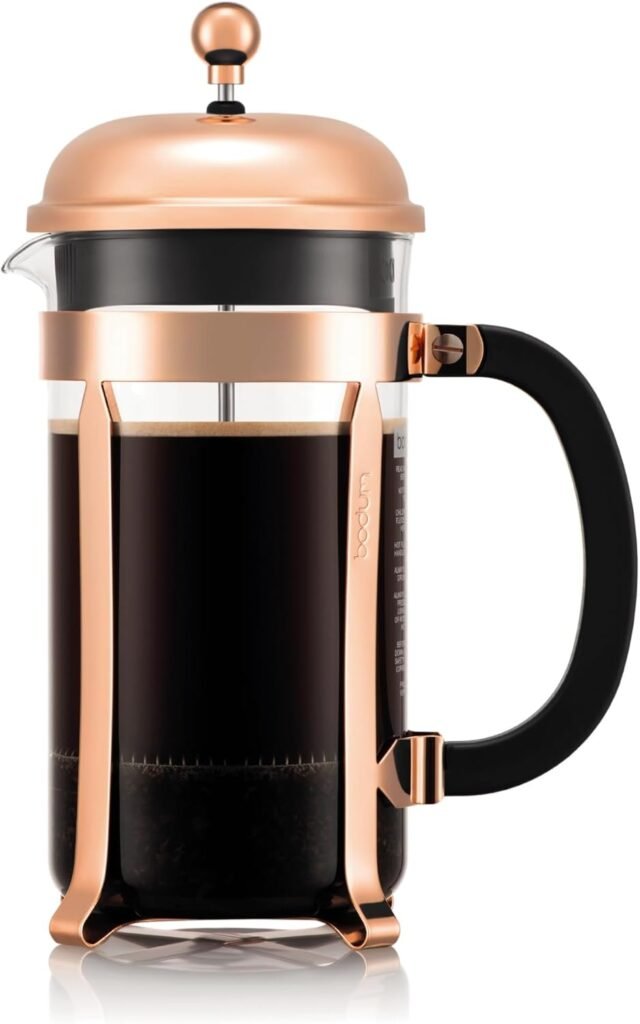
Rating: ★★★★☆ (4.6/5 on Amazon) Best For: Beginners and lovers of bold, full-bodied coffee.
When people think of “manual brewers,” the French Press is usually the first image that pops into their heads. And the Bodum Chambord is the archetype. With its chrome-plated steel frame and glass beaker, it screams classic European café culture. It is one of the simplest, most effective ways to brew coffee, and it requires zero electricity and no paper filters.
How It Works: This is a full-immersion method. You dump coarse coffee grounds into the beaker, pour hot water over them, and let them swim together for 4 minutes. Then, you slowly press the metal mesh plunger down to separate the grounds from the liquid.
Why We Love It: Paper filters absorb coffee oils. The French Press’s metal mesh filter lets those oils pass right into your cup. The result is a brew with a thick, velvety mouthfeel and robust flavor. It’s heavy, satisfying, and comforting.
Pros:
- Simplicity: No special pouring skills required. Just pour and wait.
- Eco-Friendly: No paper filters to buy or throw away.
- Capacity: The standard size (34oz) easily serves 3-4 people.
- Value: consistently one of the most affordable options on the market.
Cons:
- Sediment: You will always get a little bit of “sludge” at the bottom of your cup.
- Cleaning: cleaning wet grounds out of the bottom can be a bit messy.
- Heat Loss: Glass beakers lose heat faster than insulated steel ones.
Who Is This For? The person who wants a “strong” cup of coffee with heavy body. It’s perfect for lazy Sunday mornings where you want to brew a big batch and read the paper.
4. The Precision Tool: Hario V60 Ceramic Coffee Dripper
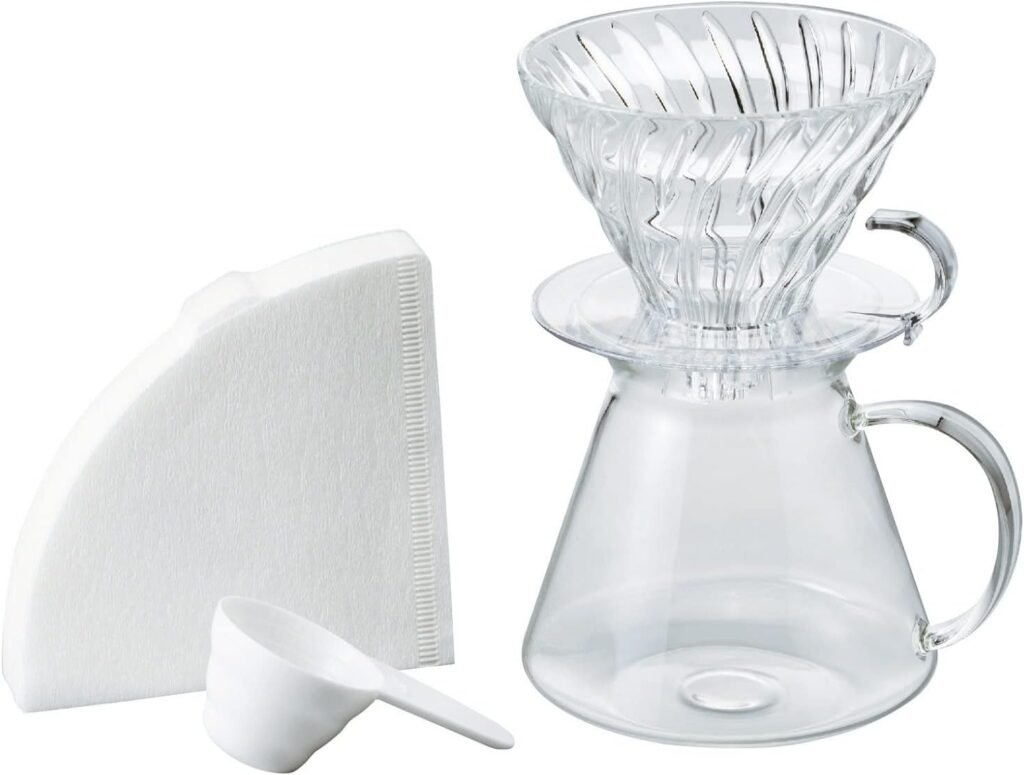
Rating: ★★★★★ (4.8/5 on Amazon) Best For: The aspiring barista and flavor chaser.
The Hario V60 is the darling of the specialty coffee world. Hailing from Japan, this cone-shaped brewer looks deceptively simple, but its design is engineered for perfection. The “V” stands for the V-shape, and “60” for the 60-degree angle of the cone.
How It Works: Like the Chemex, this is a pour-over. However, the V60 has spiral ribs on the inside that allow air to escape, and a large single hole at the bottom. This means the speed of the water flow depends entirely on your grind size and your pouring speed.
Why We Love It: It gives you total control. If you want to highlight the acidity of a Kenyan bean or the sweetness of a Colombian roast, you can adjust your pour to make it happen. The ceramic body holds heat well, and the paper filters are thin enough to provide clarity without stripping away all the body.
Pros:
- Cost: The brewer itself is very affordable (often under $25).
- Control: Allows for nuanced adjustments in flavor.
- Cleanliness: easy to clean and dishwasher safe.
- Aesthetics: Available in various colors (white, red, glass, copper).
Cons:
- Learning Curve: It is unforgiving. If you pour too fast, the coffee is weak. Too slow, it’s bitter.
- Gear Requirement: You really need a gooseneck kettle to use this effectively.
- Single Serve: Best for brewing one cup at a time.
Who Is This For? The hobbyist. If you enjoy weighing your beans, checking water temperature, and refining your technique to get the “perfect” extraction, the V60 will be your best friend.
5. The Stovetop Powerhouse: Bialetti Moka Express
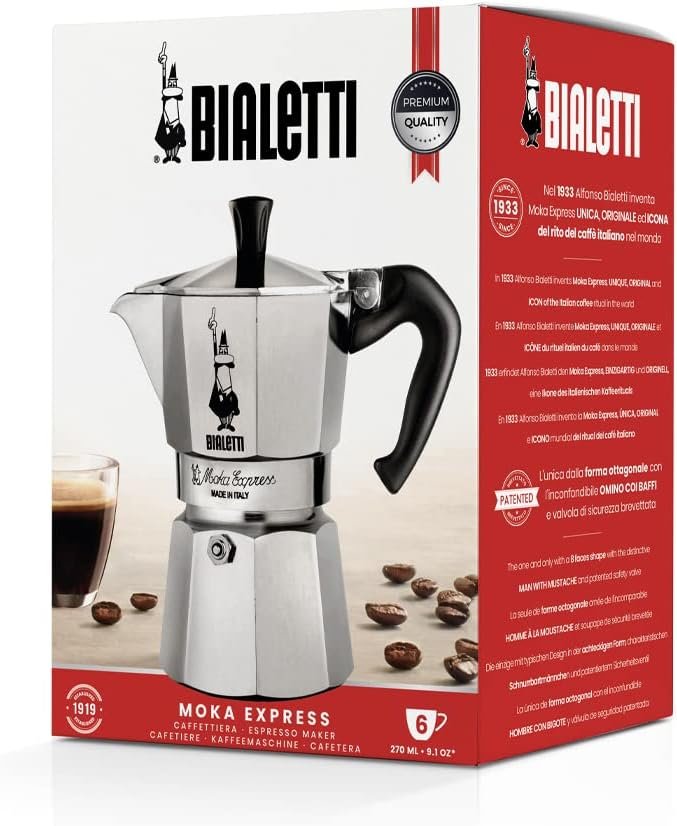
Rating: ★★★★☆ (4.6/5 on Amazon) Best For: Espresso lovers on a budget and traditionalists.
Before everyone had fancy espresso machines, Italians were using the Moka Pot. The Bialetti Moka Express, with its iconic octagonal aluminum shape and the little man with the mustache logo, is a staple in Italian households. It produces a coffee that is dense, dark, and intense—often called “stovetop espresso.”
How It Works: You fill the bottom chamber with water and the middle filter basket with fine coffee grounds. As the water boils on the stove, steam pressure pushes the water up through the grounds and into the top chamber.
Why We Love It: It bridges the gap between drip coffee and espresso. While it doesn’t generate the 9 bars of pressure needed for “true” espresso, it creates a very strong, concentrated shot that is perfect for mixing with steamed milk or hot water. It’s a mechanical marvel with no moving parts to break.
Pros:
- Strength: Brews the strongest coffee of any manual brewer on this list.
- Durability: Made of aluminum; it can last for decades.
- Simplicity: No filters to buy. Just water, coffee, and heat.
- Compact: Tiny footprint, great for small kitchens.
Cons:
- Bitterness: If you aren’t careful with the heat, it’s easy to burn the coffee.
- Aluminum: Not dishwasher safe (hand wash only!).
- Wait Time: Takes a bit longer to heat up on the stove.
Who Is This For? The latte and cappuccino drinker who doesn’t want to spend $500 on an espresso machine. It’s also great for people who like a coffee that “kicks.”
Buying Guide: How to Choose Your Manual Brewer
Still not sure which one to click “Add to Cart” on? Let’s break it down by what matters most to you.
1. Flavor Profile
- Clean & crisp: Go with the Chemex or Hario V60. Paper filters remove oils and sediment, highlighting fruit and floral notes.
- Rich & heavy: Go with the French Press. The lack of a paper filter means you get all the natural oils and a thicker texture.
- Strong & intense: Go with the Bialetti Moka Pot. It creates a concentrated, syrup-like coffee.
2. Ease of Use
- Beginner: The French Press is the easiest. Pour, wait, press.
- Intermediate: The AeroPress is easy to use but requires many steps (assembly, pressing, flipping).
- Advanced: The Hario V60 and Chemex require a steady hand and practice to master the pour.
3. Time & Convenience
- Fastest: AeroPress (about 2 minutes total).
- Slowest: Chemex or Moka Pot (can take 5-10 minutes depending on water heating and brew time).
- Batch Size: If you need to make coffee for 4 people at once, the French Press or a large Chemex are your only real options here. The V60, AeroPress, and Moka Pot are generally single-serve or double-serve tools.
4. Portability
- Camping/Travel: AeroPress is the king here. It’s plastic and compact.
- Home Only: Chemex and French Press (glass versions) are fragile and best left on the counter.
Step-by-Step: The Golden Rules of Manual Brewing
No matter which device you buy, these three steps will instantly improve your coffee game:
- Fresh Grind is Key: Coffee loses 60% of its aroma within 15 minutes of being ground. Buy whole beans and grind them right before you brew. A burr grinder is worth the investment.
- Watch Your Ratio: The “Golden Ratio” is generally 1:16—one gram of coffee for every 16 grams of water. Use a kitchen scale for consistency.
- Water Matters: Coffee is 98% water. If your tap water tastes like chlorine, your coffee will too. Use filtered water heated to about 200°F (just off the boil).
FAQ: Mastering the Manual Brew (Everything You Need to Know)
If you are new to the world of manual brewing, you probably have more questions than just “which one should I buy?” We’ve gathered the most common questions from our community to help you brew like a pro from day one.
Q: My coffee tastes sour/acidic. What did I do wrong?
A: This is the most common issue for beginners! Sourness usually means your coffee is under-extracted. The water didn’t pull enough flavor out of the beans.
- The Fix: Try grinding your beans finer. Finer grounds expose more surface area to the water. Alternatively, increase your water temperature or extend the brew time.
Q: My coffee tastes bitter and dry. How do I fix it?
A: Bitterness is the opposite of sourness; it means your coffee is over-extracted. You pulled too many harsh compounds out of the beans.
- The Fix: Try grinding your beans coarser to slow down the extraction. If you are using a French Press, try steeping it for 3 minutes instead of 4.
Q: Paper vs. Metal Filters: Which is better?
A: It’s not about “better,” it’s about what you like to taste.
- Paper Filters (Chemex, V60, AeroPress): They trap the oils (diterpenes) and fine sediment. This results in a “clean” cup with higher clarity, making it easier to taste fruity or floral notes.
- Metal Filters (French Press, Metal V60 cones): They let the oils pass through into your mug. This creates a fuller body and a richer mouthfeel, but the flavor might be less distinct or “muddy.”
Q: How do I know which grind size to use?
A: The grind size dictates how fast the water flows through the coffee. Here is a quick cheat sheet:
- Coarse (Sea Salt): French Press.
- Medium (Sand): Chemex or standard Drip Machine.
- Medium-Fine (Table Salt): Hario V60 or AeroPress.
- Fine (Powdered Sugar): Moka Pot or Espresso.
Q: Can I make Cold Brew with these manual brewers?
A: Absolutely! The French Press is arguably the best tool for making cold brew at home.
- How to do it: Use a very coarse grind and cold water at a 1:8 ratio (coffee to water). Stir it in the French Press, put the lid on (don’t plunge yet!), and stick it in the fridge for 12–18 hours. Plunge and serve over ice the next day.
Q: Do I really need a scale? Can’t I just use a scoop?
A: You can use a scoop, but coffee beans vary in density. A scoop of dark roast weighs less than a scoop of light roast.
- The Pro Tip: If you want your coffee to taste amazing every single morning, get a cheap kitchen scale ($10–$15 on Amazon). Weighing your coffee ensures you hit that perfect “Golden Ratio” (1:16) every time.
Q: Will manual brewing save me money?
A: 100% yes.
- The Math: A fancy latte costs about $5-6. A bag of high-quality specialty beans costs $18 and makes about 15-20 cups. That averages out to roughly $1 per cup. Plus, manual brewers like the V60 or French Press cost a fraction of what an automatic machine costs.
Q: I only drink dark roasts. Which brewer should I pick?
A: Dark roasts have chocolatey, nutty, and smoky notes that are often oily.
- Recommendation: The French Press or the Bialetti Moka Pot are the best choices here. They embrace the heavy body of dark roasts. Delicate brewers like the Chemex can sometimes make dark roasts taste a bit thin or acrid.
Your Perfect Cup Awaits
Switching to a manual brewer is one of the cheapest upgrades you can make to your lifestyle. For the price of a few Starbucks runs, you can own a piece of equipment that will serve you delicious coffee for years.
- Want the best taste? Grab the Chemex.
- Want the best travel buddy? Get the AeroPress.
- Want the boldest kick? Buy the Bialetti Moka Pot.
The morning is the most important part of the day. Stop tolerating mediocre coffee and start crafting a cup that brings you joy.
Ready to upgrade your morning ritual? Head over to Amazon now to check the latest prices on these brewers and start your journey toward coffee perfection.
Subscribe to mindgearmen.com and also follow our pinterest profile.